Interesting building in Bronx (II)

17 Mar

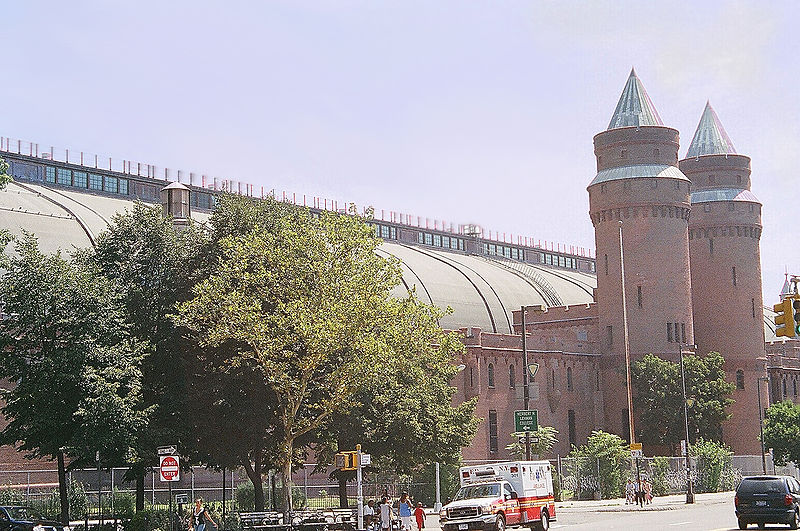
The Kingsbridge Armory, with its massive and crenellated parapets, gives the appearance of a medieval Romanesque fortress. Officially the home of the 258th Field Artillery (8th Regiment), it is reputedly the largest armory in the world, covering an entire city block. Designed by the firm of Pilcher & Tachau, which gained acclaim for their competition design of 1901 for the Squadron C Armory in Brooklyn, the Kingsbridge Armory was built on the site of the proposed eastern basin of the Jerome Park Reservoir.
800px Kingsbridge Armory

Excavation had begun for the eastern basin in the early 1900s, but the state legislature authorized the site for a National Guard Armory in 1911. A number of military relics were exposed during the excavation, reflecting the site’s proximity to the sites of Fort Independence and Fort Number Five of the American Revolution.
800px Kingsbridge_Road_station_with_armory

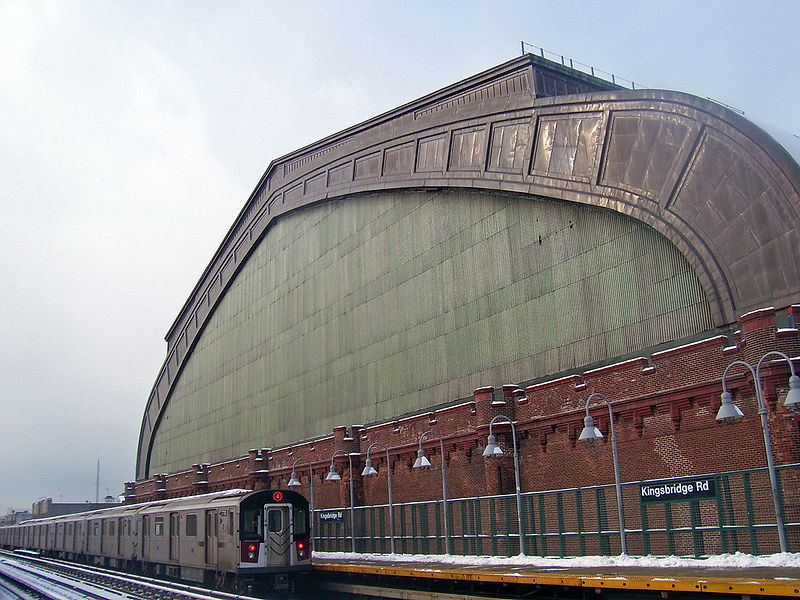
The red-brick walls are timed with stone and punctuated at regular intervals by slit window openings. Two semi-engaged, round towers crowned by conical roofs flank the main entrance. A stone stairway leads up to the round-arched doorway, where massive iron gates protect paneled doors. A metal and glass roof spans the enormous drill hall.
Unisphere

26 Jan

Dsc00423b
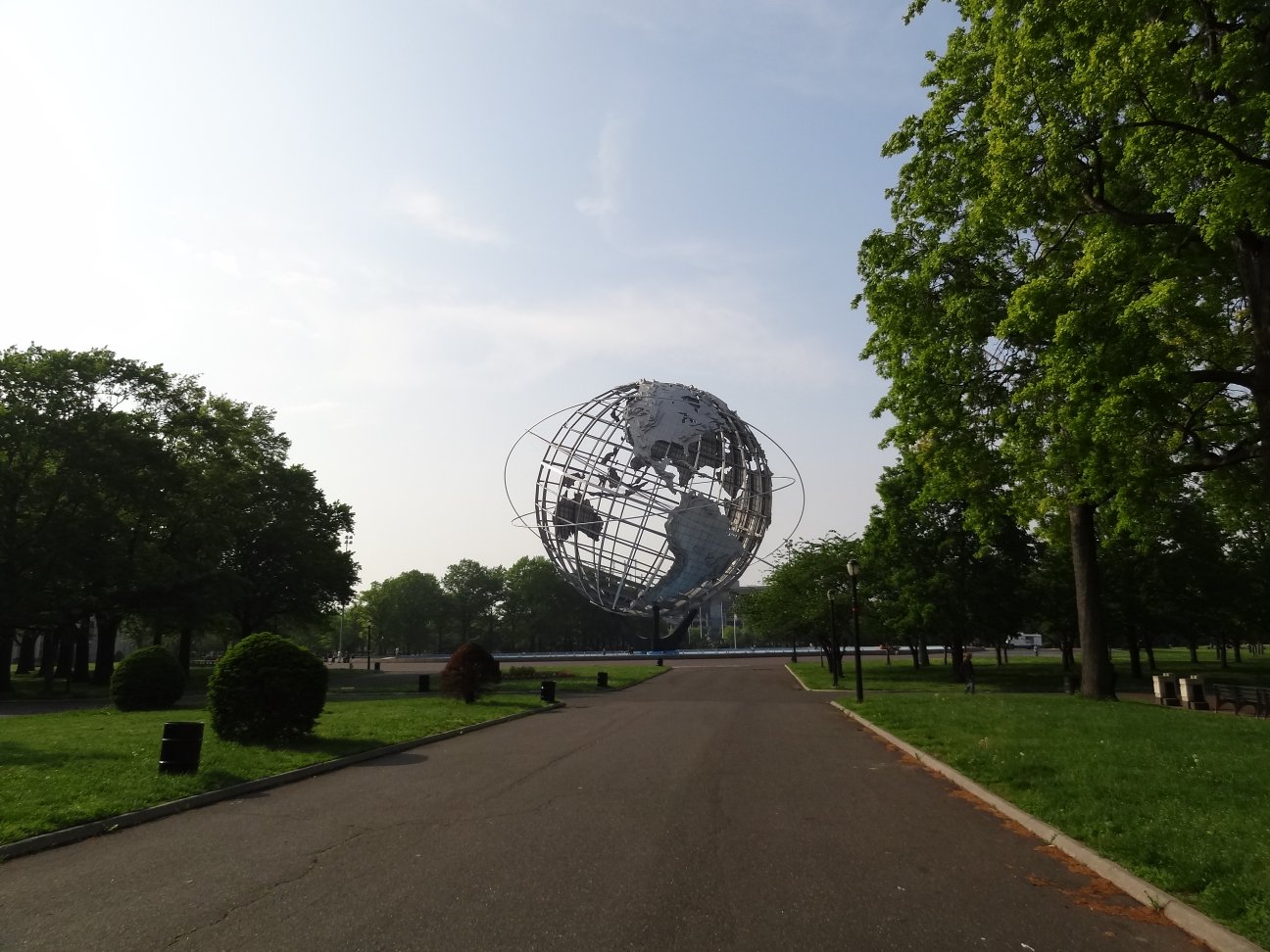
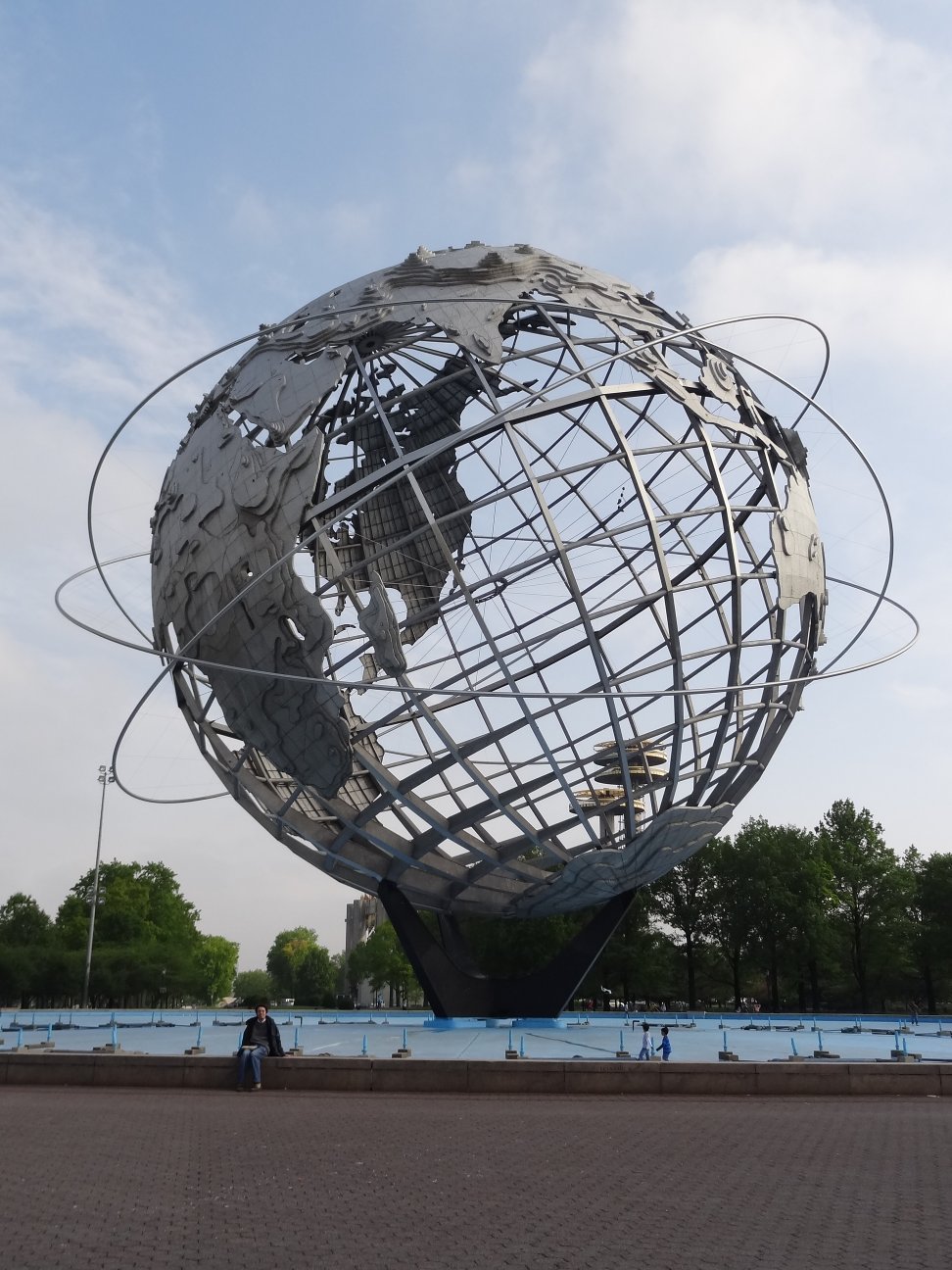
Located it the Flushing Meadows-Corona Park in Queens, the Unisphere is a giant stainless-steel globe. It was both the physical center and visual logo of the 1964–65 World’s Fair. It embodied the fair’s theme, “Peace through understanding in a shrinking globe and in an expanding universe.” The Unisphere was designed by Gilmore D. Clarke, the noted landscape architect who also designed the grounds of the 1939–40 World’s Fair, which took place on the same site. His 1964 plan set pavilions, sculptures, and fountains on axes radiating from the Unisphere in a geometric, Beaux-Arts-inspired layout.

Dsc00412b
Towering over a circular reflecting pool punctuated with fountains, the Unisphere celebrates the dawn of the space age. The structural steel cage is 140 feet high and 120 feet wide, and its more than 500 components weigh over 700,000 pounds. Winding steel members represent lines of latitude and longitude, curved shapes represent the continents, and suspended rings mark the first man-made satellite orbits. The world’s capital cities are marked by lenses, which were backlit during the World’s Fair.

The fair was a financial failure, ending more than $11 million in debt, and its remaining assets were spent on demolishing the exhibitions and restoring Corona Park. The Unisphere remained, but there was little money to maintain it. By the 1970s, the fountains had been shut down, the pool drained, and the site covered in graffiti. Beginning in 1989, the Department of Parks and Recreation cleaned and restored Corona Park; the Unisphere was restored in 1993–94 with funds from the Queens Borough President’s Office.

Interesting building in Brooklyn (I)

26 Dec

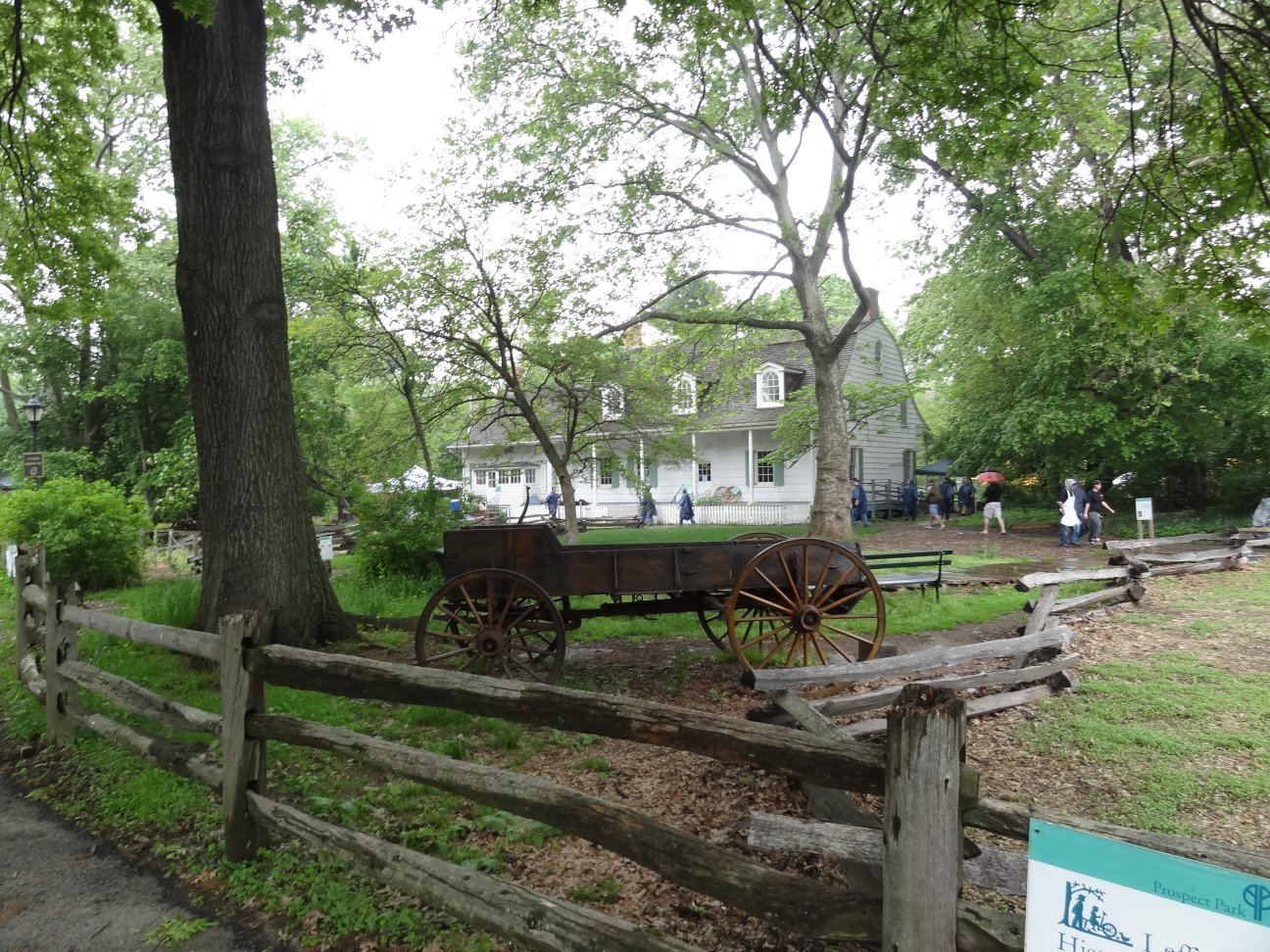
Located in Prospect Park, the Lefferts Homestead was built between 1777 and 1783. It was moved down Flatbush Avenue to Prospect Park in 1918. This is a typical Dutch Colonial farmhouse with a low-pitched roof, arched dormer windows, and a colonnaded porch.

Dsc01496b

Sapin de Noël

8 Dec

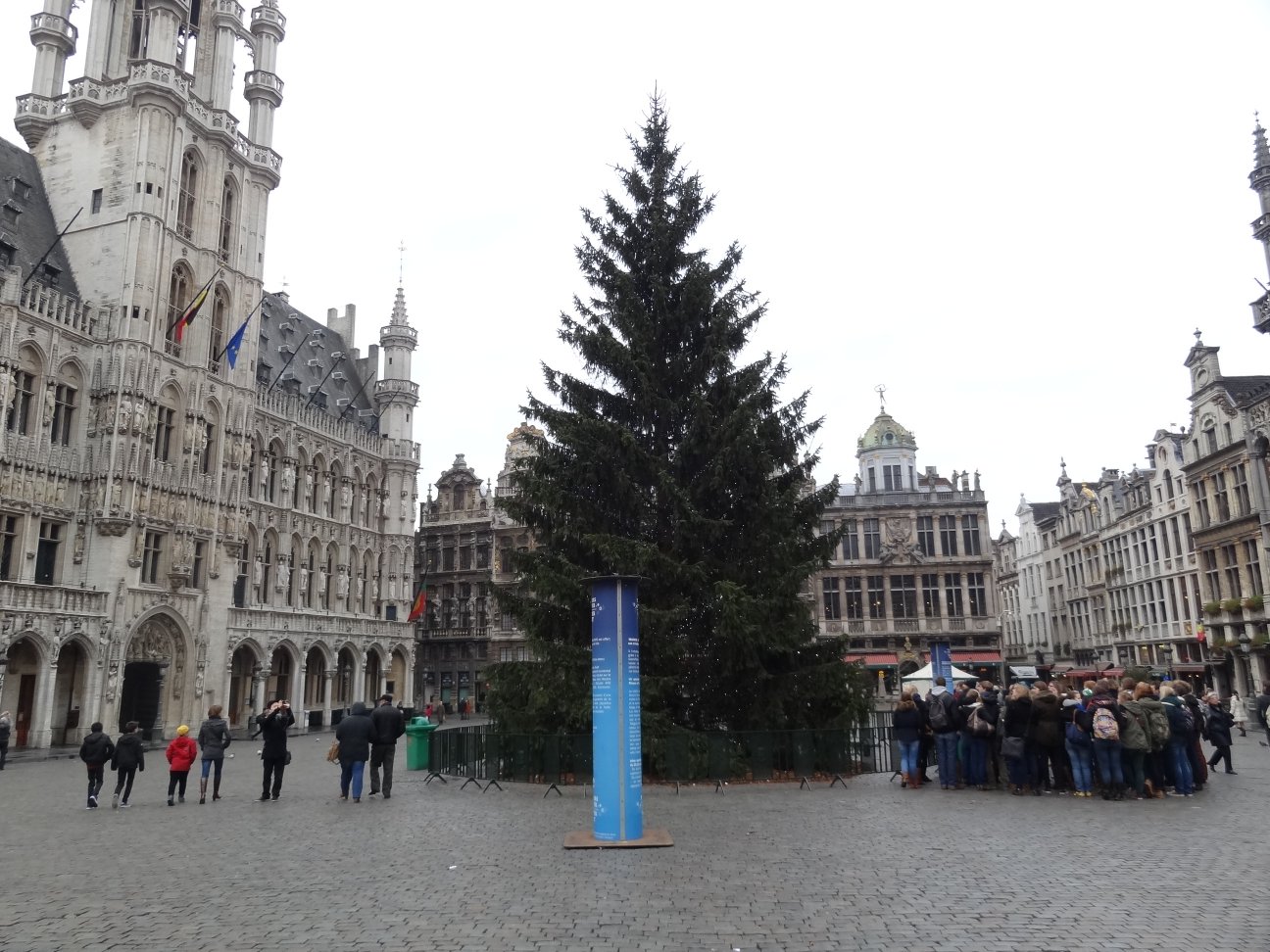
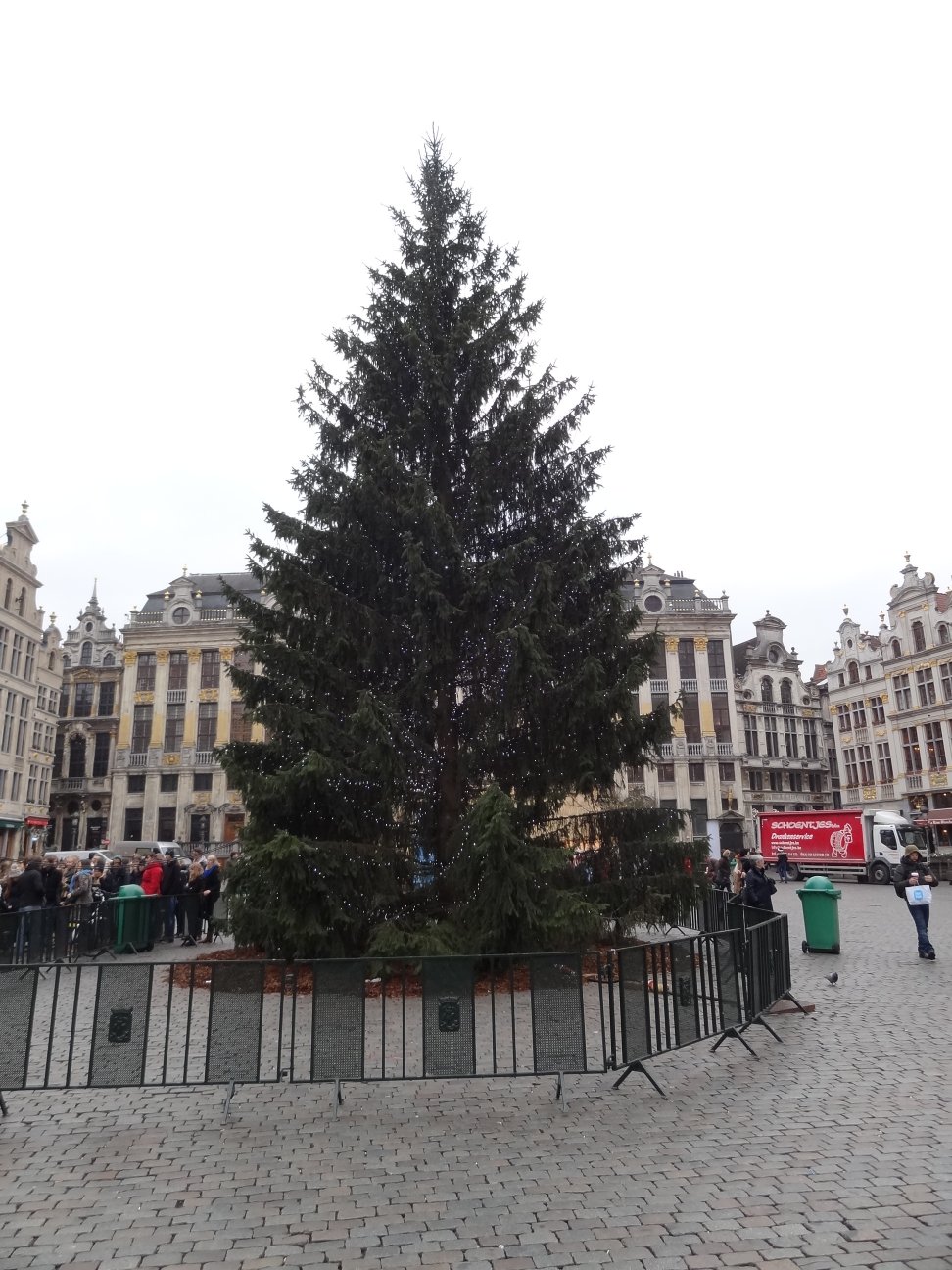
Mercredi, je suis allé à la Grand Place pour prendre quelques photos du beau sapin de Noël. Il n’est pas très haut mais au moins, c’est un vrai…

Dsc01705b

Dsc01704b

Interesting building in Manhattan (IX)

18 Oct

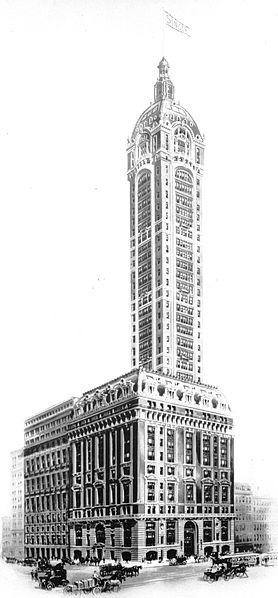
Singer Building

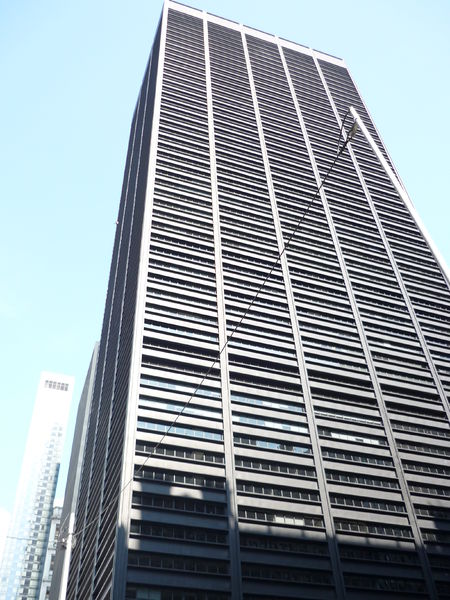
The fabulous Singer Building, 186m high and easily the tallest building in the world when completed in 1908, was designed by Ernest Flagg as the headquarters of the Singer Manufacturing Company. The company was founded in 1851 by Isaac Singer, whose wife was the model for the Statue of Liberty. The actual offices were accommodated in the lower block of 12 storeys while the stunning red-brick and bluestone beaux-arts tower, with its distinctive bulbous top, recognisable from miles away, served largely as an enormous advertisement for Singer Sewing Machines. On moving its headquarters to the Rockefeller Center in 1961, Singer sold the tower to a developer who was hoping to tempt the NYSE to relocate there, but due to the shape of the building there was too little office space and so it was sold to U.S. Steel, who dismantled the whole structure and replaced it with the 226m high skyscraper we see there today, One Liberty Plaza. When the Singer Building was taken down in 1967, it became the tallest building ever to be legitimately demolished.

One Liberty Plaza

Intersting building in the Bronx (I)

18 Sep

973px P1020279

The Poe Cottage is one of the few extant 19th century wood-frame residences in the Bronx. Built for John Wheeler, the simple clapboard farmhouse with attic and porch stands 1.5 stories tall. The siding and shutters are original; the doors and windows, while period originals, were added in 1913. It was erected in 1812 and stood initially on Kingsbridge Road. The cottage was moved in 1895 to allow for the widening of the road and again in 1913 to occupy a 2.5 acre plot designated Poe Park by the City of New York. Poe rented the small farmhouse from 1846 to 1849 in the hope of providing his dying wife, Virginia, with therapeutic country air. The treatment failed, and Virginia died in the cottage’s first floor bedroom on January 30, 1847. Poe died a couple of years later on October 7, 1849, while in Baltimore. It is generally believed that Poe wrote Annabel Lee, a memorial to his young wife, and his last great work, Eureka, while he lived there.

Interesting building in Manhattan (VIII)

25 Aug

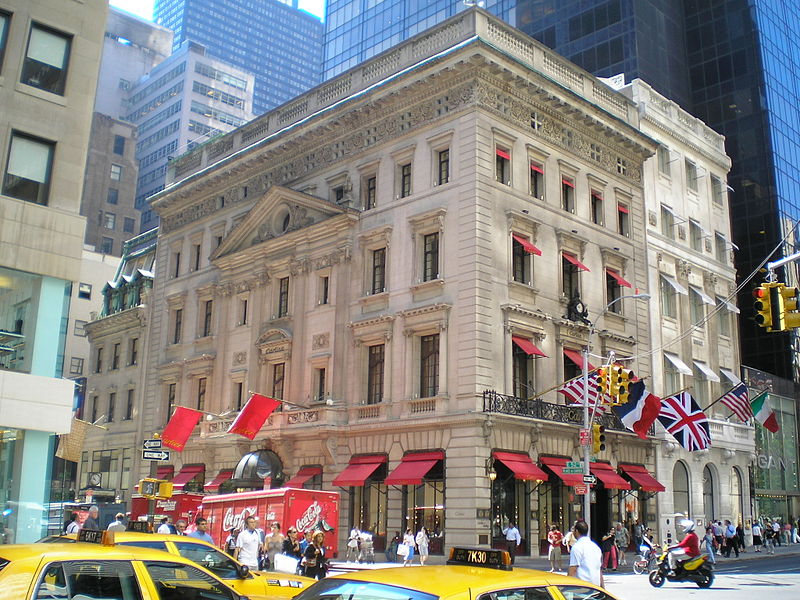
Cartier

The Morton F. Plant House is located on Fifth Avenue, at the crossroads with E 52nd Street. This elegant, six-story Italian Renaissance-style building was designed for Morton F. Plan, a banker and yachtsman, and owner of two baseball teams. The E 52nd Street façade is dominated by an ornately carved balcony supported by heavy console brackets at the second floor; four fluted Doric pilasters rise two stories above the balcony and support the low-pitched pediment. The fifth-floor attic windows are set in a profusely decorated frieze. In  1917, Cartier acquired the building in an extraordinary manner: Mrs. Plant swapped the house for a necklace of perfectly matched, giant Oriental pearls that had been the pride of Pierre Cartier’s collection. The jewelers have been located here ever since.

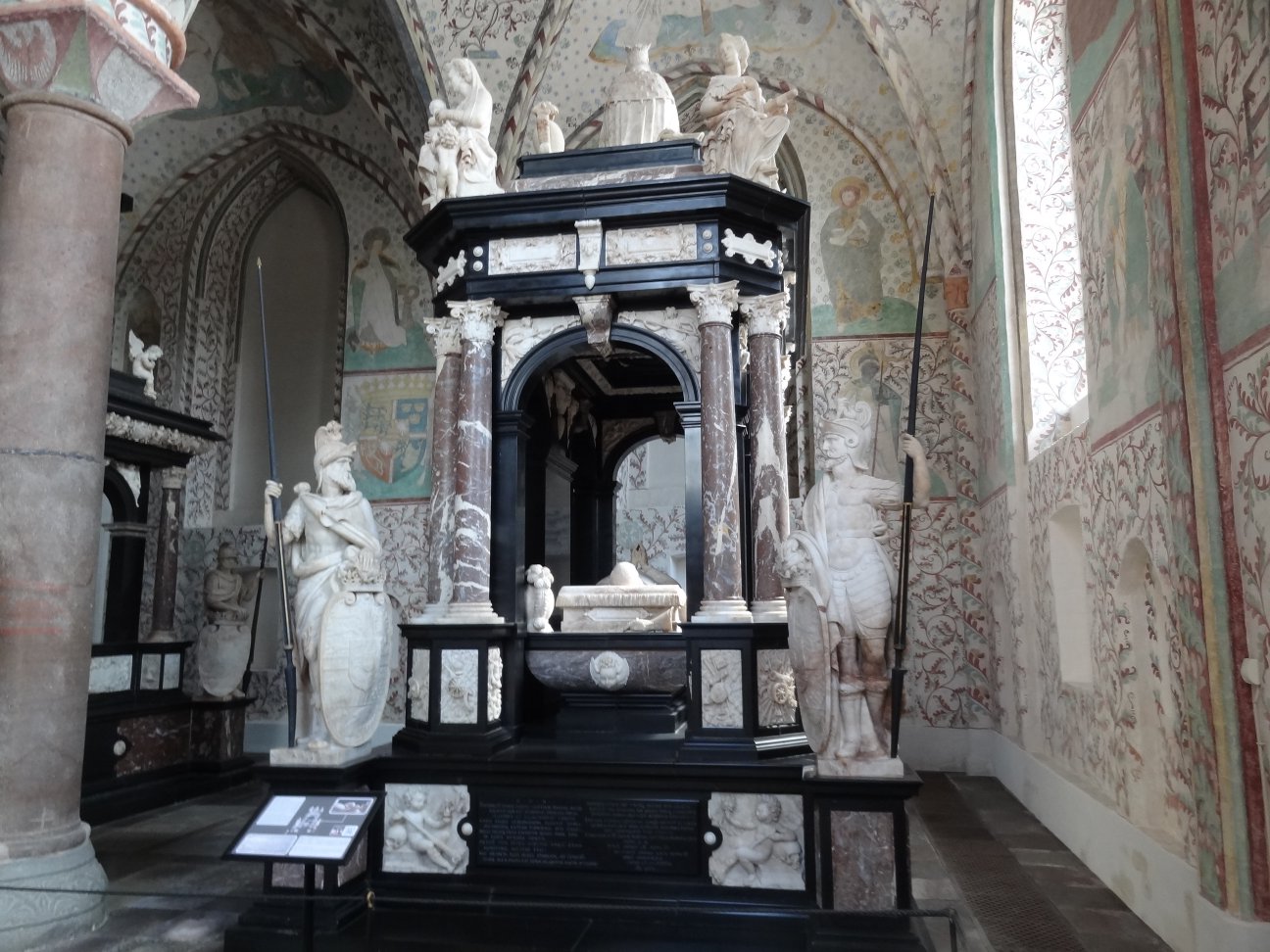
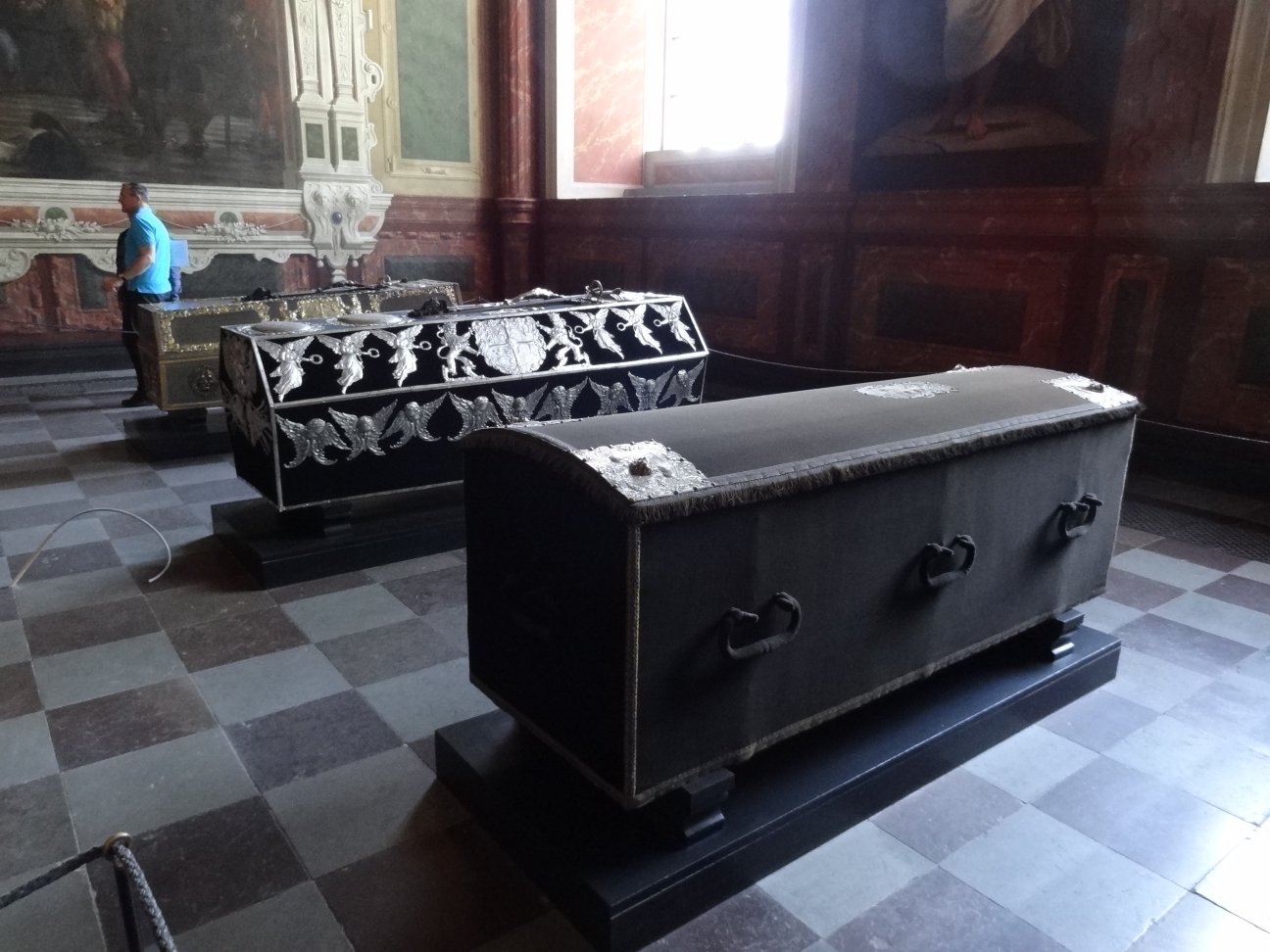
Roskilde Domkirke

17 Jul

Today, I publish a few pictures from the famous church of Roskilde.

Dsc07635Dsc07652Dsc07657Dsc07733Dsc07739

Link

Sélène Wolfgang

5 Jun

Sélène Wolfgang

A tous les amateurs de poésie, je suggère de faire un détour par le site de Sélène Wolfgang. Sa poésie est symboliste, marquée par le merveilleux et le fantastique.

Link

Jazz & the Big Apple

11 May

Jazz & the Big Apple

The New York City Landmarks Preservation Commission has compiled a nice slideshow (in PDF format) of the landmark buildings and historic districts in NYC that served as the homes and stages for some of the world’s most important jazz figures.